



Helping wounded warriors play music and recover their lives
It is difficult to imagine the life of a severely wounded warrior. Many have had their lives blown up in every sense of the word. MusiCorps is an innovative program that improves quality of life and aids healing during long and difficult periods of recovery.
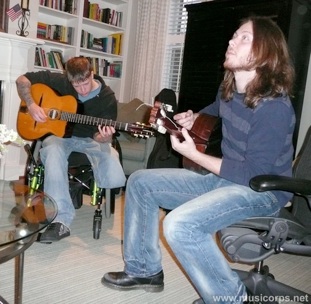
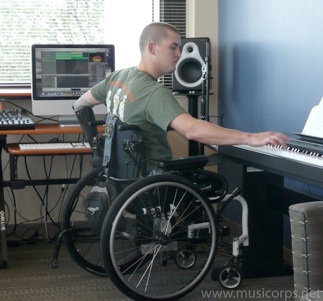
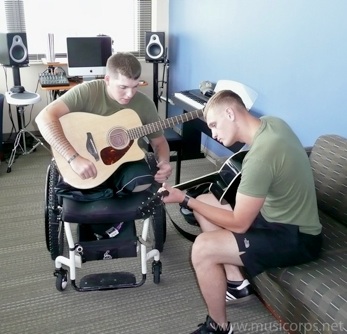
MusiCorps replicates “real world” music relationships so that wounded warriors work on, and are motivated to work on, robust goal-oriented projects many hours a day. Musicorps integrates individualized projects, regular visits by highly accomplished musicians, and the use of specially-assembled computer-based music workstations along with traditional instruments. Working in any musical style they prefer, participants are able to learn, play, write, and record original material.
MusiCorps provides numerous benefits for service members facing the challenges of severe injury and lengthy hospitalizations, helping them remain productive, transcend disability, and do something they love, even as they recover from multiple serious injuries. One described a “ripple effect” improving every aspect of his recovery.
MusiCorps also aids recovery from war-related trauma including PTSD (post traumatic stress disorder) and TBI (traumatic brain injury). Concussive blasts from IEDs and other explosions cause TBI, and it has been called the signature injury of the war on terror. Learning, creating, and performing music involves so many aspects of brain function that it is believed to recruit uninjured parts of the brain to compensate for parts that have been injured, and to help those parts that are injured recover. Among others, MusiCorps is advised by Dr. Allen Brown, Director of Brain Research and Rehabilitation at the Mayo Clinic.
MusiCorps began when RIME founder Arthur Bloom was invited to visit a soldier recovering at Walter Reed Army Medical Center. The soldier, a drummer who lost his leg to an IED, expressed his pain, frustration, and as the seed of an idea took root, enthusiasm for a music program.
Bloom founded MusiCorps to not only help this soldier regain the ability to play drums, but also to help any wounded warrior learn or relearn how to play music during their recovery. As its participants flourished, the program grew, with overwhelming support from wounded warriors, their families, medical staff, military leadership, and the musical community.
MusiCorps has become a pioneer in the field of adaptive music, and helped countless wounded warriors play music and recover their lives.
“It’s a vital tool for people in recovery. It’s being able to continue on. To keep moving and doing things. It’s a major thing and I’m very grateful that such a program exists.”
- SGT Jonathan A. Wimsatt
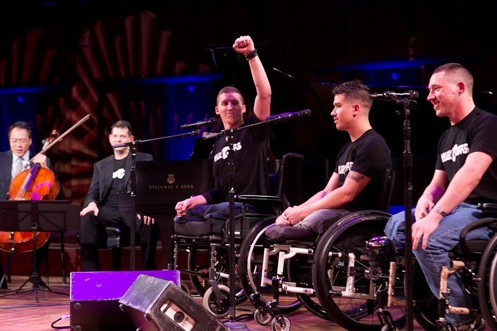
The MusiCorps Wounded Warrior Band performing with Yo-Yo Ma at the Kennedy Center